
Agency growth
Why Scaling Agencies Need a Dedicated Customer Support Partner for Shopify
By Patrick · Founder, Virtual Freelance Solutions · 10+ years in eCommerce customer support
Why post-launch support changes the game
When sales surge, so do the questions. "Where is my order?" "How do I process a return?" "Why isn't my discount code working?" Suddenly, the conversation shifts from development roadmaps to a flood of support tickets.
This is the exact moment when the value of a customer support partner for Shopify agencies becomes undeniable. Partnering with a specialized customer experience (CX) team allows you to provide end-to-end value to your clients, transforming your agency from a mere development shop into a comprehensive e-commerce growth partner.
In this comprehensive guide, we will explore everything you need to know about navigating the world of e-commerce support, from choosing the right tech stack to leveraging support as a revenue driver.
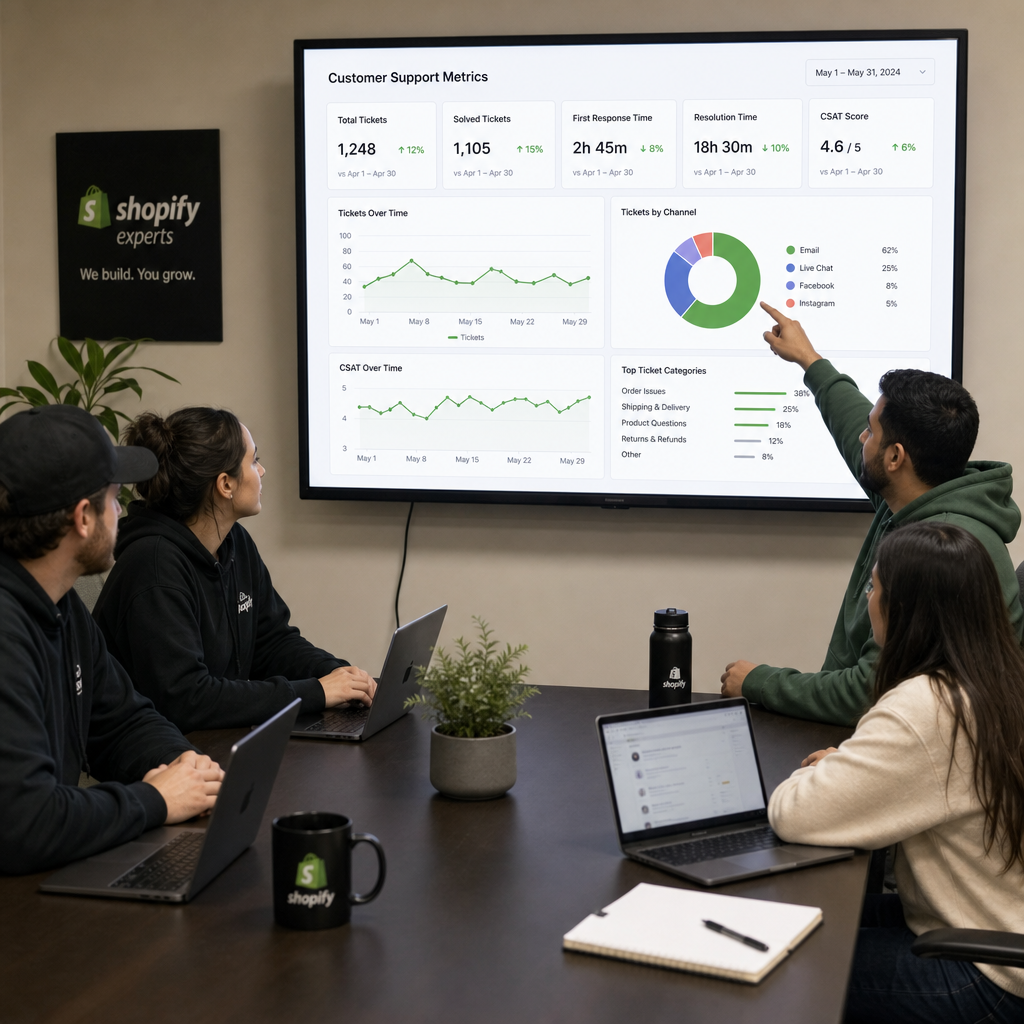
The Support Dilemma: In-House vs Outsourced Help Desk for E-commerce Agencies
When deciding how to manage post-launch reality, agencies and their merchant clients typically face a crossroads: build an internal team or hire external experts. The debate between an in-house vs outsourced help desk for e-commerce agencies is a critical one.
The In-House Approach
Building an in-house support team requires recruiting, hiring, training, and managing full-time customer service representatives.
- Pros: Complete control over company culture, direct communication with the development team, and deep, intimate knowledge of the brand.
- Cons: Extremely expensive, difficult to scale during peak seasons (like Black Friday/Cyber Monday), and highly susceptible to turnover. Furthermore, building an internal team diverts an agency's attention away from its core competency: building and scaling Shopify stores.
The Outsourced Approach
Partnering with a dedicated CX team means plugging into an existing infrastructure of trained professionals.
- Pros: Instant scalability, cost-effectiveness, access to premium tech stacks, and around-the-clock coverage.
- Cons: Less immediate physical oversight, and a reliance on strict Standard Operating Procedures (SOPs) to maintain brand voice.
For most scaling agencies, the outsourced model wins. But this leads to a vital question: why should Shopify agencies outsource support services rather than simply handing the problem back to the merchant?
The answer lies in client retention. When you offer a solution to your client's biggest operational headache, you make your agency indispensable. You move from being a one-off contractor to an essential, long-term strategic partner.
Key Benefits of a Customer Support Partner for Shopify Agencies
Finding the right customer support partner for Shopify agencies provides tangible, measurable benefits that directly impact both your agency's bottom line and your clients' success.
1. Reducing Support Ticket Backlog for Shopify Merchants
Nothing kills consumer trust faster than a long wait time. During peak shopping events or sudden viral social media moments, merchants often experience ticket volumes that exceed their internal capacity. A specialized partner excels at reducing support ticket backlog for Shopify merchants by deploying trained overflow agents, utilizing AI-driven automation, and implementing efficient triage systems. Fast responses translate directly into salvaged sales and positive reviews.
2. Merchant Retention Through Proactive Customer Support
Many agencies struggle with churn once the initial web build is complete. By providing an integrated support solution, you are actively contributing to the merchant's daily operations. Merchant retention through proactive customer support is a powerful growth lever. When a merchant sees that your agency's partner is not just answering complaints, but actively reaching out to customers about shipping delays or offering post-purchase onboarding, they associate that high-tier value directly with your agency.
3. 24/7 Technical Help Desk for Shopify Merchants
Customers shop globally, which means technical glitches don't respect business hours. If a checkout portal crashes at 2:00 AM on a Sunday, your client loses money every minute it stays down. Offering a 24/7 technical help desk for Shopify merchants ensures that both basic customer inquiries and critical site-breaking technical issues are caught and escalated immediately. A reliable partner monitors the store around the clock, protecting the merchant's revenue and your agency's reputation.

Core Features to Look for in an Outsourced CX Management Partner
Not all BPO (Business Process Outsourcing) companies are created equal. When vetting an outsourced CX management for Shopify experts, you need a team that understands the nuances of the Shopify ecosystem. Here are the core features you must demand.
White Label Customer Service for E-commerce Agencies
Your clients hired your agency because they trust your brand. A premium partner will offer white label customer service for e-commerce agencies. This means the support team operates entirely under your agency's banner (or the merchant's brand name). The emails, live chat widgets, and knowledge base articles look completely native. The end customer—and sometimes even the merchant—never knows a third party is involved. This seamless integration protects your agency's brand equity.
Deep Ecosystem Integration
The partner must be fluent in the Shopify app ecosystem. They should know how to navigate ReCharge for subscriptions, Yotpo for reviews, Klaviyo for marketing, and ShipStation for logistics. If an agent has to constantly ask the development team how a specific app works, the partnership is failing.
Mastery of the Best Customer Service Platforms for Shopify Developers
E-commerce support is no longer managed effectively through a standard Gmail inbox. Your partner needs to be proficient in the best customer service platforms for Shopify developers. While tools like Zendesk, Freshdesk, and Kustomer are popular, one platform consistently reigns supreme in the Shopify space.
Integrated Gorgias Support for Shopify Agency Clients
Gorgias is built specifically for e-commerce, making it a non-negotiable tool for top-tier agencies. A skilled partner will provide integrated Gorgias support for Shopify agency clients, leveraging the platform's deep Shopify integration to view order data, edit shipping addresses, and process refunds directly from the helpdesk. They will build custom macros, set up intent-based auto-responders, and utilize machine learning to categorize tickets by sentiment—turning a chaotic inbox into a streamlined machine.
Building a Scalable and Profitable Support Strategy
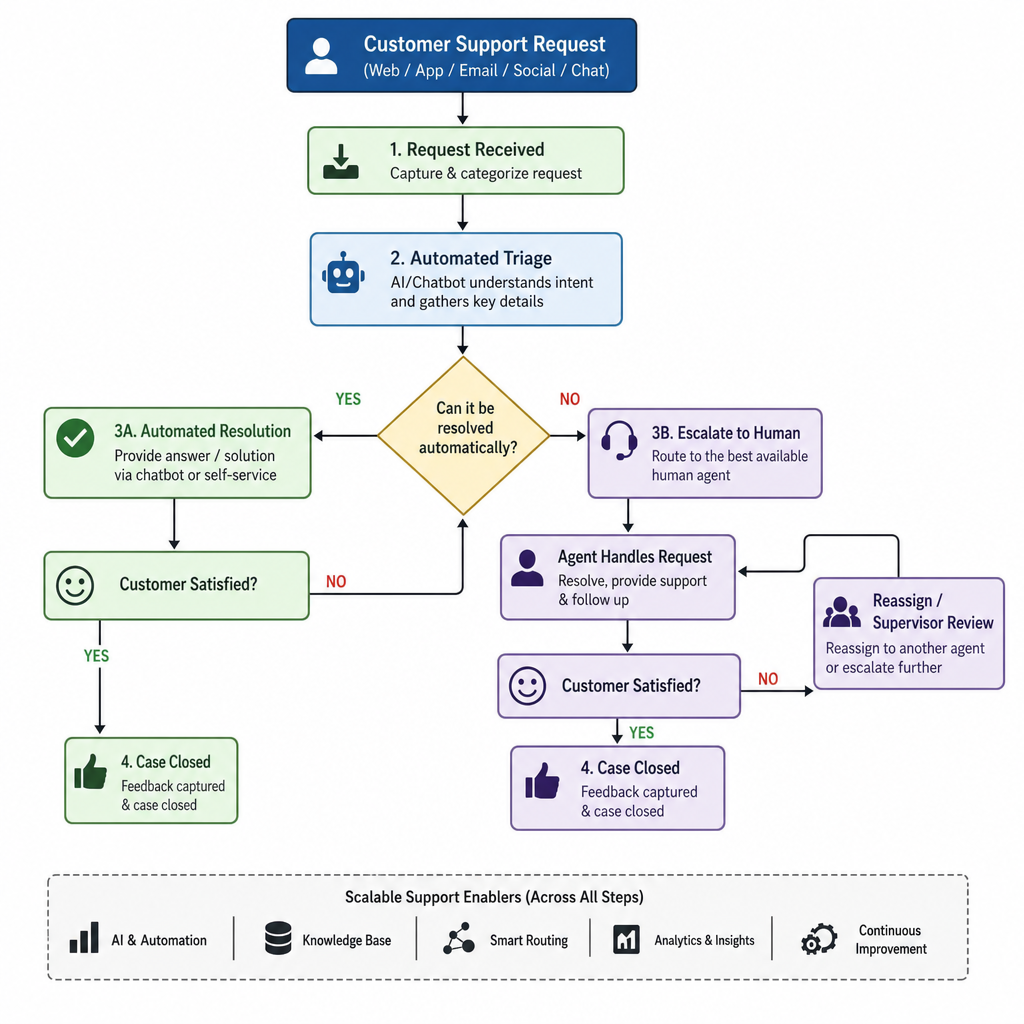
Once you have selected a partner, the next step is defining how to manage customer inquiries for Shopify store clients effectively. It requires more than just answering emails; it requires a documented, scalable strategy.
Setting Up a Scalable Support Workflow for Brand Owners
To prevent agents from burning out and to keep response times low, you and your partner must focus on setting up a scalable support workflow for brand owners. This workflow generally involves three tiers:
- Tier 0: Self-Service & Automation. Before a customer ever reaches a human, they should be guided to a robust, SEO-optimized Knowledge Base or an AI chatbot. Frequently Asked Questions like "What is your return policy?" or "How long does shipping take?" should be answered instantly via automation.
- Tier 1: Frontline Triage. For queries that bypass automation, human agents provide swift resolutions. This includes "Where is my order?" (WISMO) tickets, simple exchanges, and product inquiries. Your partner should handle 80-90% of these tickets using predefined SOPs.
- Tier 2: Escalation & Technical Resolution. This tier handles complex issues—damaged goods, custom order requests, or bug reports on the Shopify store itself. These are neatly packaged with all relevant context by the support partner and escalated to the merchant or your agency's development team.
Multi-Channel Support Strategy for Shopify Partners
Modern consumers expect to communicate with brands on their own terms. If a customer finds a product on Instagram, they want to ask questions via Instagram DMs. Implementing a multi-channel support strategy for Shopify partners is vital.
Your customer support partner must seamlessly manage inquiries across:
- Email: The traditional backbone for complex inquiries and paper trails.
- Live Chat: Essential for pre-sales questions and reducing cart abandonment.
- Social Media: Facebook, Instagram, TikTok, and X (formerly Twitter).
- SMS: Rapidly becoming the preferred channel for quick updates and order modifications.
Centralizing these channels into a single dashboard prevents siloed communication and ensures the customer doesn't have to repeat themselves if they switch from SMS to an email thread.
Customer Experience Optimization for E-commerce Growth
Customer support should never be viewed as a static operation. It is a goldmine of data. Customer experience optimization for e-commerce growth means taking the insights gathered from support tickets and feeding them back to the merchant.
For example, if the support partner notices a 30% spike in tickets complaining about a specific discount code not applying at checkout, they can immediately alert your agency. Your developers can fix the bug, potentially saving the merchant thousands of dollars in abandoned carts. This proactive feedback loop elevates your agency from a service provider to a critical business advisor.
Measuring Success: Post-Purchase Metrics and Revenue
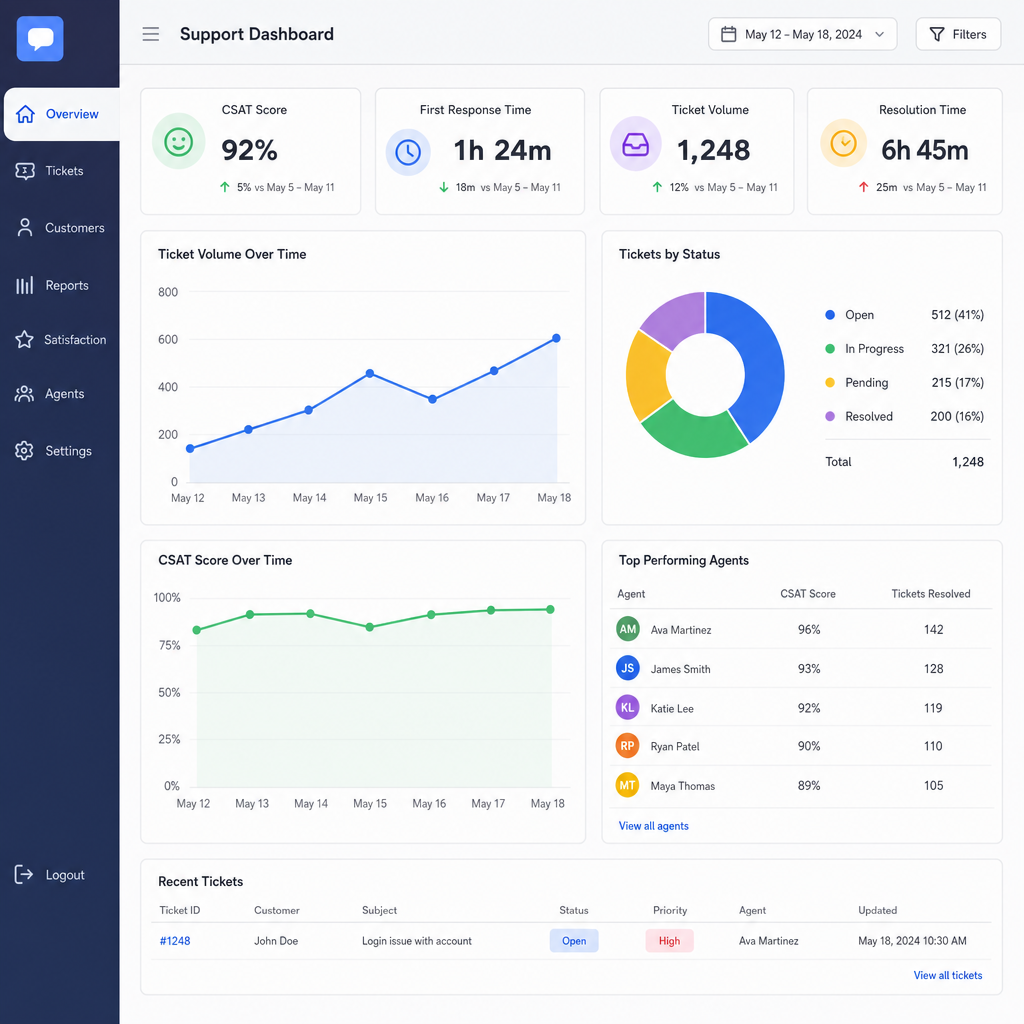
How do you prove the value of your newly integrated support solution to your clients? You rely on hard data. A high-quality support partner will provide transparent reporting on KPIs that matter to e-commerce merchants.
Tracking Post-Purchase Customer Satisfaction Metrics
To guarantee the end-customer is happy, your partner must rigorously track post-purchase customer satisfaction metrics. The most important metrics include:
- First Response Time (FRT): The time it takes for an agent to initially reply to a customer. In e-commerce, an FRT under 10 minutes on live chat and under 2 hours via email is the gold standard.
- Resolution Time: How long it takes to completely solve the customer's issue and close the ticket.
- Customer Satisfaction Score (CSAT): A post-interaction survey (usually a 1-to-5 star rating) that measures how happy the customer was with the support they received.
- Customer Effort Score (CES): Measures how easy it was for the customer to get their problem solved. A lower effort score correlates heavily with higher repeat purchase rates.
Regularly reviewing these metrics with your clients proves that your outsourced partner is delivering on their promises and maintaining the brand's premium reputation.
Revenue-Driven Customer Support for Scaling Agencies
Historically, customer service has been viewed as a cost center—a necessary evil of doing business. However, the modern approach flips this narrative entirely. The ultimate goal of partnering with a CX expert is to establish revenue-driven customer support for scaling agencies.
Support agents are interacting with highly qualified leads: people who are either on the site contemplating a purchase, or people who have already bought and are engaging with the brand post-purchase. A skilled support partner trains their agents to:
- Cross-sell and Upsell: If a customer asks if a certain pair of boots is waterproof, the agent answers the question and suggests purchasing the accompanying leather waterproofing spray.
- Save Cancelled Orders: When a customer asks to cancel an order due to shipping times, an empowered agent might offer expedited shipping at no cost, or a 15% discount on their next order, saving the immediate revenue.
- Drive Loyalty Programs: Agents can proactively invite highly satisfied customers to join the brand's VIP loyalty or referral program, turning a simple support interaction into long-term Customer Lifetime Value (CLV).
By transforming the helpdesk from an expense into a revenue-generating channel, your agency provides immense, easily quantifiable ROI to your Shopify merchants.
Actionable Tips for Successfully Onboarding a Support Partner
Integrating a third-party team into your agency's offerings requires strategic alignment. Here are practical steps to ensure a smooth transition:
- Start with an Audit: Before bringing on a partner, audit your clients' current support volume, most common queries, and peak hours. This ensures you buy the right amount of coverage.
- Build a Comprehensive Brand Book: Ensure the partner has access to the merchant's tone of voice guidelines, brand values, and a list of "do's and don'ts" regarding customer communication.
- Establish Clear Escalation Protocols: Define exactly what constitutes a "Tier 1" ticket vs. a "Tier 2" ticket. Create a clear Slack channel or shared board where developers and support agents can seamlessly pass critical issues back and forth.
- Schedule Bi-Weekly Syncs: For the first 90 days, hold regular alignment meetings between your agency, the client, and the support partner to tweak macros, update product knowledge, and refine the workflow.
Conclusion: Elevating Your Agency's Value Proposition
In the highly competitive world of Shopify development and marketing, agencies must constantly look for ways to differentiate themselves. Simply building a beautiful website is no longer enough to guarantee long-term retainers. Merchants need holistic partners who can guide them through every stage of the e-commerce lifecycle.
By finding the right customer support partner for Shopify agencies, you solve one of the most persistent bottlenecks your clients face. You replace chaos with a structured, data-rich, and revenue-generating machine. Whether it's setting up an integrated Gorgias helpdesk, deploying a multi-channel communication strategy, or offering 24/7 technical peace of mind, outsourced CX management elevates your agency's value proposition. Ultimately, exceptional post-purchase support leads to happy customers, happy customers lead to thriving merchants, and thriving merchants lead to a highly successful, rapidly scaling Shopify agency. Take the leap, find your CX partner, and watch your agency's retention rates soar.
We specialise in acting as the reliable backend engine for fast-growing e-commerce agencies in the US, Europe, and Australia. Book a discovery call and let's partner up to scale together.
People Also Ask
- An agency provides trained backup coverage, documented SOPs, and continuity if one agent is out — a solo VA has none of that redundancy, so a sick day or turnover becomes your problem.
- Ask for their actual response time data from current clients, request a trial period on a real ticket queue, and confirm who specifically will be handling your account day-to-day — not just who's on the sales call.
- Yes, when the partner supports it — clients expect a single point of contact, and white-labeling keeps the agency relationship intact rather than exposing subcontracted support.
Related resources
Related service pages
Want to see how this would look for your brand?
We'll walk through your current support stack, ticket categories, and tooling — and show you what an operationalized version looks like inside Zendesk, Gorgias, or Help Scout.